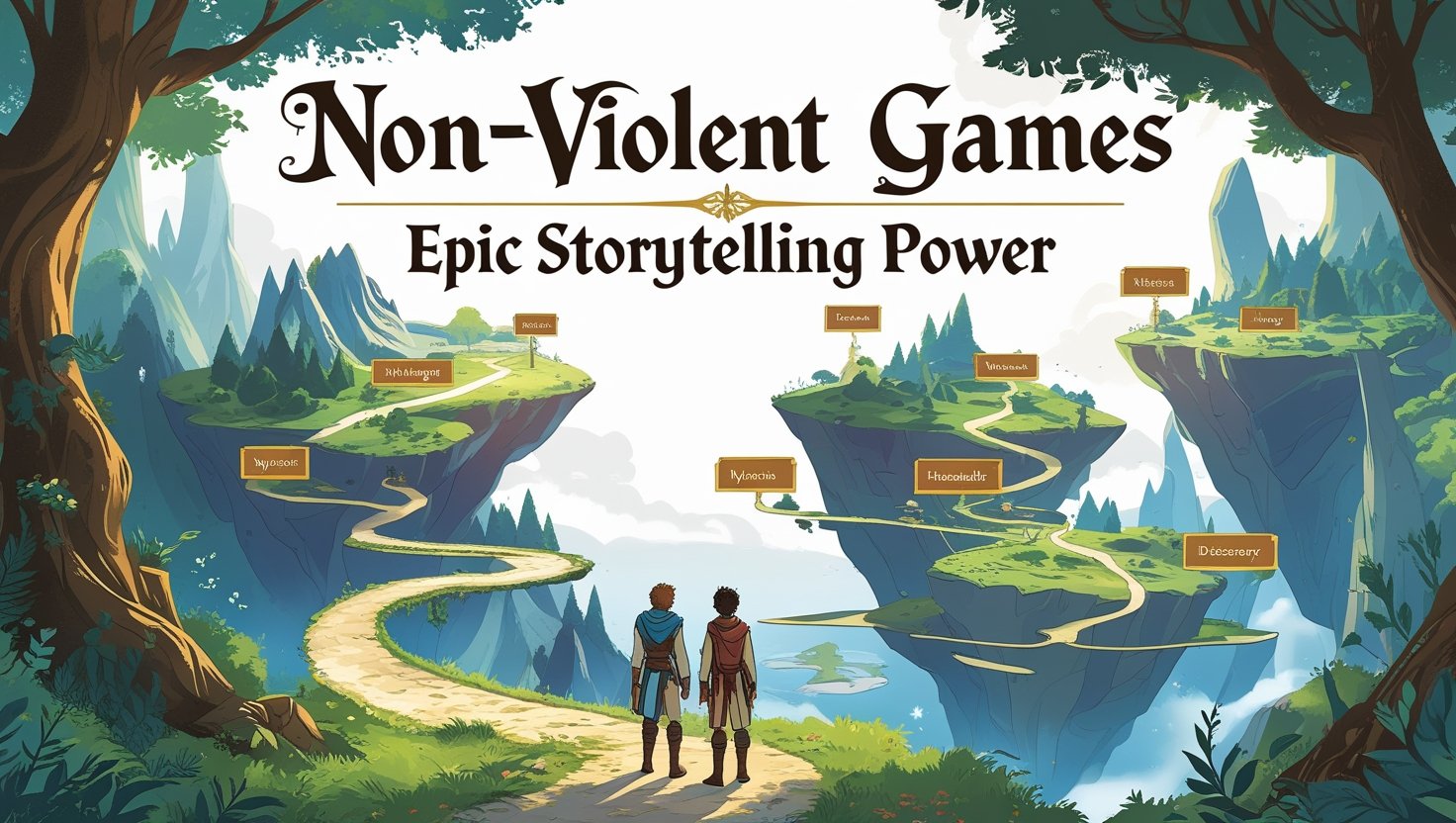
Imagine stepping into a digital realm where the heart of the adventure is not measured by violence but by passion, emotion, and the transformative power of narrative. Non-Violent Games redefine interactive entertainment with Epic Storytelling Power that captivates players through immersive worlds and rich characters. In an era where gameplay no longer relies solely on combat, these games invite us to explore stories that touch the soul and inspire change.
The Evolution of Narrative:
In the early days of gaming, conflict and competition often took center stage. Traditional titles were built on the premise of overcoming adversaries through force. However, as gaming matured, developers began to understand that a story could be just as compelling, if not more so, when it centered on exploration, decision-making, and emotional depth.
Today, Non-Violent Games have carved out a niche that challenges the status quo. Emerging titles have embraced the art of storytelling by focusing on rich, interactive narratives where every choice shapes the outcome. This evolution is not merely a trend; it reflects a growing desire among players for experiences that foster introspection, empathy, and a deeper connection to the characters on screen.
The transition toward narrative-driven gameplay has been driven by advancements in technology and a broader shift in player expectations. Modern gamers seek experiences that transcend conventional mechanics, favoring worlds that reward thoughtful exploration over mere physical dominance. This genre now stands as a testament to the idea that engaging, epic stories can be woven without a single act of violence, proving that the true power of a game lies in its ability to inspire and move its audience.
Transcending Conflict:
At the very core of Epic Storytelling Power is the conviction that narratives can be as dynamic and engaging without the backdrop of physical combat. The creative minds behind non-violent games channel their energy into crafting stories that evoke emotion, challenge perceptions, and celebrate the complexities of human relationships.
Titles such as Journey, Firewatch, and Stardew Valley have shown that gameplay centered on discovery, personal growth, and the bonds between characters can captivate millions. In these games, conflict emerges not from violence but from internal dilemmas, environmental challenges, and the pursuit of dreams. Every narrative twist is designed to stir the heart, relying on character development and rich world-building to create stakes that resonate deeply with players.
This shift in focus has paved the way for diverse storytelling techniques. Dialogue trees that let players negotiate their own paths, decisions that have far-reaching consequences, and environments that breathe life into every frame stand as testaments to storytelling artistry. By sidestepping violence, these games open the door to narratives that explore themes of redemption, hope, and human connection, all while offering a gameplay experience that is both thought-provoking and emotionally rewarding.
Designing Worlds of Wonder:
One of the hallmarks of non-violent games is the ability to transport players into meticulously crafted worlds that feel both vast and intimate. Developers are now tapping into the power of visual storytelling, using breathtaking art styles, interactive environments, and ambient soundscapes to create settings where every corner holds a story of its own.
Imagine wandering through a serene village where the changing seasons mirror the inner life of its inhabitants. Consider the quiet, haunting beauty of a post-apocalyptic city reclaimed by nature or the vibrant colors of a fantasy realm where magic breathes life into every element. These are the domains in which Non-Violent Games shine, worlds that invite exploration, stimulate wonder, and encourage players to engage with the narrative through their unique lens.
The emphasis on world-building goes hand in hand with eco-friendly, sustainable design and a commitment to artistic integrity. By focusing on the environment as a central character, game creators can subtly communicate messages about conservation, community, and the passage of time. In doing this, players are not just observers but active participants in an unfolding epic, where every interaction is a piece of the larger narrative puzzle. This deep immersion is what transforms a game from simple entertainment into a moving, memorable experience.
Characters and Choices:
A powerful narrative is often anchored by unforgettable characters whose stories compel us to care. In Non-Violent Games, character development takes center stage, offering players a chance to explore intricate relationships and moral dilemmas without the shock value of gore or conflict.
Complex characters allow players to navigate difficult choices, each decision influencing the trajectory of the story. Whether it’s deciding the fate of a struggling community, forging alliances with enigmatic figures, or embarking on a personal quest for self-discovery, every choice adds a layer of depth to the narrative. The absence of physical conflict shifts the focus towards intellectual and emotional challenges, making the gameplay experience more inclusive and reflective of real-life struggles.
Developers use innovative mechanics like branching dialogue, relational dynamics, and consequence-based plots to heighten emotional involvement. This creates a feedback loop where empathy is rewarded, both in the story and in the gameplay. When players witness characters growing through their own choices, they are more likely to internalize the lessons offered and apply them in their own lives. This intersection of art and interactivity is at the heart of what makes Non-Violent Games so distinct and powerful, a dynamic blend of gameplay and narrative that champions personal growth over physical confrontation.
The Heart of the Story:
In an age where many digital experiences tend to be fast-paced and adrenaline-fueled, Non-Violent Games serve as a calming alternative, an oasis that nurtures mental well-being through emotional storytelling. Rather than instigating conflict, these games gently guide players on a journey of self-discovery and introspection.
Research has shown that engaging with thoughtful, narrative-rich content can be beneficial to mental health. The immersive worlds and emotionally charged stories found in non-violent games encourage relaxation, reduce stress, and even foster a sense of mindfulness. The act of exploring a beautifully rendered world, forging meaningful connections with characters, and unraveling an intricate plot can create a meditative experience that allows players to disconnect from the pressures of everyday life.
Moreover, these games tend to celebrate diversity, human resilience, and the beauty of perseverance. By offering narratives that prioritize emotional intelligence over brute force, they send a powerful message: that strength is measured not by the ability to overpower, but by the capacity to empathize and grow. This paradigm shift in interactive entertainment demonstrates that epic storytelling can be a transformative antidote to the chaos of the modern world, providing a much-needed space for healing and reflection.
Beyond the Screen:
The potential of Non-Violent Games is only beginning to be tapped. As technology continues to evolve, developers are exploring new frontiers that merge virtual reality, augmented reality, and artificial intelligence to create even richer narrative experiences. Imagine stepping into a world where you can physically interact with the environment, influence characters with your voice, and see your choices come to life in real time.
The integration of these technologies promises to push the boundaries of epic storytelling even further. Virtual reality (VR) experiences are already transforming how we perceive interactive narratives, transporting players into fully immersive worlds where the line between reality and fiction blurs. Augmented reality (AR), on the other hand, allows for a hybrid experience, one where the digital narrative seamlessly integrates with the real world, offering layered, context-sensitive storytelling.
Furthermore, advancements in AI are set to revolutionize character interactions by creating dynamic, responsive NPCs that learn and evolve throughout the game. This means no two playthroughs will be the same, as the narrative adapts to each player’s unique decisions and behaviors. With these innovations on the horizon, the future of Non-Violent Games is brimming with possibility, a future where epic storytelling is limited only by our imagination.
Conclusion:
Non-Violent Games prove that the true strength of interactive entertainment lies in the art of storytelling. By embracing rich narratives, immersive worlds, and deep character connections, these games offer players an experience that transcends traditional conflict. They remind us that epic stories can be told through heartwarming journeys and thought-provoking choices, stories that resonate, inspire, and ultimately enrich our lives.
FAQs:
- What are non-violent games?
They are games that focus on storytelling, exploration, and decision-making without relying on physical conflict or violence. - How do non-violent games deliver epic stories?
They use immersive narratives, detailed world-building, and deep character development to create emotionally engaging experiences. - Can non-violent games impact mental well-being?
Yes, their calming, reflective nature can reduce stress, promote mindfulness, and foster emotional connection. - What makes non-violent games different from traditional games?
They prioritize narrative and emotional depth over combat, challenging players with moral dilemmas and immersive journeys. - Are there examples of popular non-violent games?
Absolutely; titles like Journey, Firewatch, and Stardew Valley are celebrated for their storytelling and immersive experiences. - What does the future hold for non-violent storytelling in games?
As technology advances, expect even richer interactive narratives with VR, AR, and AI-driven character dynamics that continually evolve.