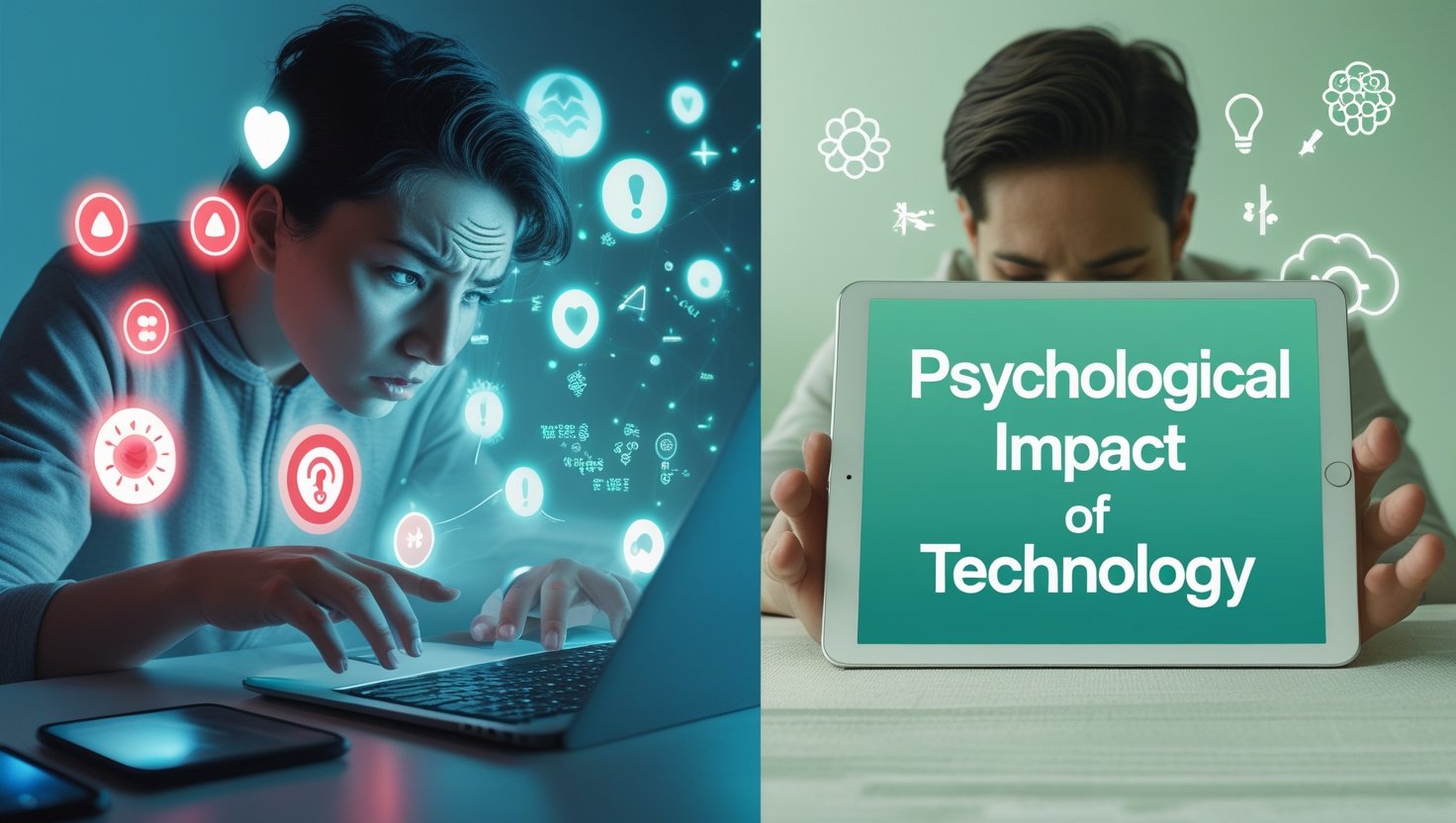
Today’s world has become completely digital. Everyone has a smartphone in their hands, the internet is available in every home, and most people spend their time online. Be it work, peace, leisure, or social interaction, everything is now done through technology. This change seems very easy and convenient, but there are many psychological implications hidden behind it, which are slowly affecting our minds and health.
When we remain in front of screens for hours every day, our brain feels tired, sleep becomes less, and we start getting emotionally drained. Social media has not only connected us with people but has also created comparisons and self-doubt. The constant receipt of notifications, replying to messages, and the pressure of being online, all these things are adding up to stress and anxiety.
This introduction makes the basic point of this blog clear that technology is a powerful tool, but if it is misused or overused, then it can deeply affect our mental peace and quality of life. In this blog, we will explore the impact of technology on mental health and how we can achieve a healthier and peaceful lifestyle by balancing our digital life.
Increased Screen Time and Mental Fatigue:
Nowadays, everyone checks their mobile as soon as they wake up in the morning and keeps watching the screen even before going to sleep at night. This routine has slowly become normal, but its effect falls on our mind and physical energy. When we use a mobile, laptop, or tablet for hours every day, our eyes get tired, our brain feels overworked, and our focus becomes less. This is called mental fatigue, which means mental fatigue which reduces productivity.
Excessive screen time also affects sleep. The blue light that is emitted from screens disturbs the sleep cycle of the brain, which results in incomplete sleep. When sleep is not complete, one feels lethargic and stressed throughout the day. Children and youngsters are falling prey to this problem more because they spend most of their time on video games, YouTube, and social media.
The solution to this problem is to manage screen time. One should take a break of 5-10 minutes every hour and stay away from the screen at least 1 hour before going to sleep at night. This way, not only will your sleep improve, but your mind will also feel fresh. Maintaining balance is the real way to prevent technology from going against your health.
Social Media and Self-Esteem Issues:
Social media has connected the world, but through it people’s self-esteem is also being greatly affected. When people see the lives of others on Instagram, Facebook, or TikTok, their photos, vacations, and achievements, they often start comparing their own lives with them. This comparison culture creates a feeling of deficiency in a person, and he feels that he is not enough.
Often, people ignore their real lives and start chasing perfect moments on social media. Constantly looking at the number of likes, comments, and followers is a cause of stress and anxiety. This digital validation has become a new scale of people’s self-worth, which is unhealthy.
Only good things are shared on social media; no one shows their problems or sorrows openly. But when others only show happiness and you face your real struggles, that contrast makes you hollow from within. This increases the risk of depression and low self-esteem.
The solution to this problem is to use social media positively and limitively. It is very important to seek love for yourself and give importance to real-life connections. Every person’s journey is different, so stop comparing yourself with anyone else.
Technology Addiction and Its Consequences:
Technology addiction has become a new and serious issue. When you use a mobile or computer without any reason, remain online all the time, and feel terrible if the device is not around, then this is a sign of addiction. This addiction not only wastes time but also affects your mental health, relationships, and daily life.
Many people take the help of games, scrolling, or videos to relieve their stress. Initially, it gives relief, but slowly it becomes a habit. When faced with real-life problems, people start hiding in the digital world. This unhealthy coping mechanism distances you from real problems and makes you emotionally weak.
This addiction also has an impact on social life. You become distant from your friends and family, real conversations reduce, and you feel lonely. Along with this, health issues like weakened eyesight, sleep disturbance, and physical inactivity also increase.
The solution is to monitor your daily screen time, do a digital detox, and divert your interests towards offline hobbies. Technology is important, but becoming a slave to it is harmful from every angle. The best way to avoid addiction is to gain control over yourself.
Strategies for a Balanced Digital Life:
Bringing digital life into balance is important for everyone, be you are a student, a professional, or a parent. Nowadays, technology is everywhere, but if we do not use it wisely, it can harm both our mental and physical health. Therefore, it is important to follow some strategies so that we take advantage of technology without becoming addicted to it.
The first strategy is to set digital boundaries. Such as keeping a distinction between work and personal time, avoiding screens before bedtime, and keeping devices aside when spending time with family or friends. In this way, you can enjoy real-life experiences.
The second step is screen time monitoring. Through mobile apps and phone settings, you can track daily usage and limit or delete unnecessary apps. Also, using “do not disturb” mode or app timers is helpful.
Mindful usage is also very important. Use the phone for a specific purpose instead of scrolling all the time. Instead of doing everything online, it is also important to sometimes do offline tasks, like reading, walking, or participating in a family gathering.
Planning a digital detox, like spending a day without a phone on weekends, improves both your mental clarity and focus. Balance doesn’t mean giving up technology, but incorporating it into your life with a healthy limit.
Conclusion:
This blog aims to understand the psychological dangers of technology and provide practical strategies to deal with them. Technology has given us convenience, but if overused or misused, it can lead to mental fatigue, anxiety, depression, and social disconnect. Everyone is a part of this digital world, but we mustn’t lose ourselves in it.
Managing screen time, staying away from the pressures of social media, and giving importance to your real life are very important. Self-awareness and keeping track of your usage are the first steps towards better digital habits. If you spend a few hours daily away from screens, adopt mindful usage and value real-life moments, your mind will remain fresh and your life will also get balance.
Technology is beneficial only when it makes your life better if it starts ruling you, then its benefits turn into disadvantages. Therefore, the time has come when we should use digital life consciously, rather than just go with its flow. Only with healthy tech habits can we find peace in our mind, heart, and life.