In today’s time, when the job system is rapidly changing in the world, just getting a traditional university degree is not beneficial for everyone. Now people are looking towards more practical and skill-based education, where they can get a job quickly and make their life journey easier. That is why the importance of trade schools or vocational education is increasing day by day. Trade schools are those institutions that train students in some specific skill, like an electrician, plumber, mechanic, IT technician, chef, etc. These programs are of less importance and prepare them for the direct job market.
Today’s industries need skilled people who have learned practical work and not theory. This is why the future of trade schools looks very bright. This is not just for low-income students but for all those who want to build a quick and strong career. In this blog, we will see how the status of trade schools is changing, what new trends are emerging, and what role they will play in the modern economy in the times to come.
Shifting Perceptions – From Backup Option to First Choice:
Earlier, people considered trade schools as a backup option. If someone did not get admission to a university, he was sent to a trade school. But now this thinking is changing rapidly. Today, both parents and students have started realizing that practical skills are as important as a degree. When people see that electricians, plumbers, welders, or IT technicians are earning good incomes and it is not difficult for them to get jobs, they are naturally attracted to these skills. Trade schools are now not just for people with “low marks” but also for those who want a focused career without wasting too much time and money. This change has come about due to the media, industry experts, and successful, skilled workers. Now people have accepted that not everyone needs a university—some people become more successful by learning a trade. This kind of change in thinking is a very positive development for trade schools, which makes their future even stronger.
Integration of Technology and Modern Tools in Training:
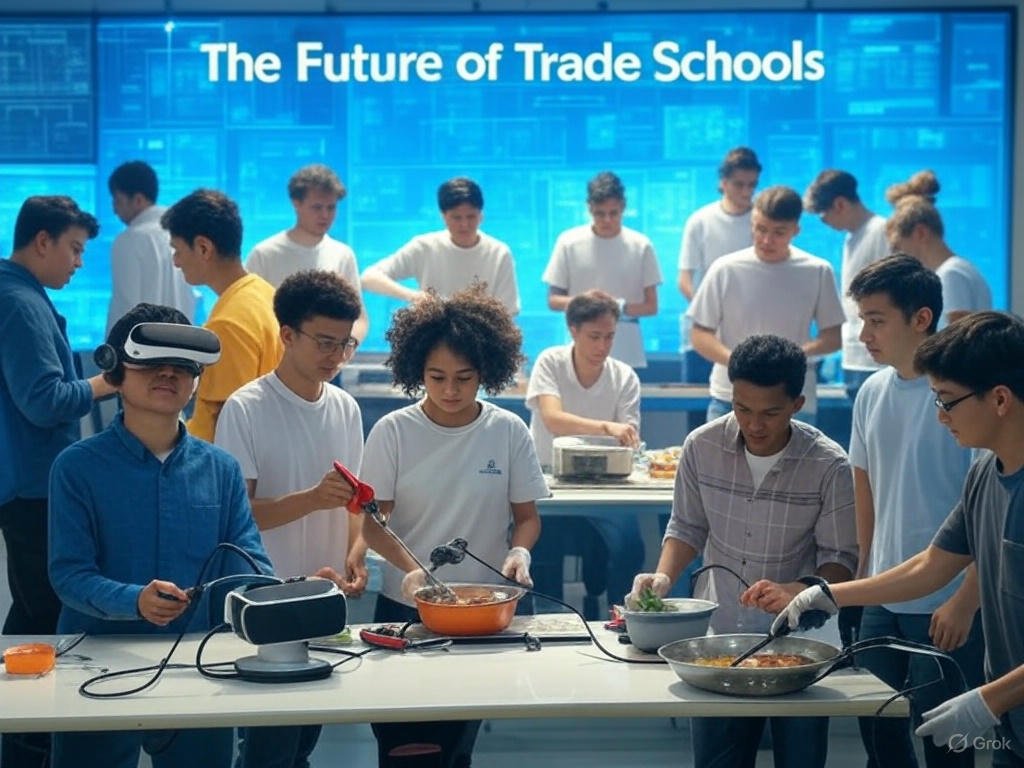
Today’s trade education is not the same as before. New tools and technologies are being used in training, such as virtual reality (VR), augmented reality (AR), digital simulations, and smart devices. With the help of these modern tools, students experience real-life situations without any physical risk. For example, a mechanic student can practice engine repair by wearing a VR headset, or an electrician can learn wiring in a simulation without touching any wires. This kind of training not only makes learning interesting but also strengthens the skills of the students. Teachers are also making lectures interactive through smart boards and e-learning platforms, which improves both understanding and retention.
Industries also want their new workers to be familiar with these technologies. For this reason, trade schools are updating their curriculum so that students can become market-ready. These digital tools not only teach students the use of technology but also develop skills like critical thinking and problem-solving, which are useful in every field.
Industry Partnerships and Tailored Curricula:
Today’s trade schools are designing their courses in collaboration with industries. This means that students are being taught the same skills that the companies need. Earlier, students would learn one thing and then learn another on the job, but now this gap is narrowing. Partnerships are being formed between industries and trade schools where companies give their input on what kind of training should be provided. Many companies also offer internships and apprenticeships where students gain real-world experience.
This increases the students’ chances of getting a job, and companies get trained workers without much training. The advantage of a tailored curriculum is that every field, such as healthcare, construction, IT, or automotive, can train students according to their needs. This collaboration is not just beneficial for the students but also the country’s economy as the demand for skilled labor is increasing everywhere. The future of both trade schools and industries appears secure with this system.
Growth of Online and Hybrid Vocational Programs:
Just as online education has changed the world, trade education is also moving towards online and hybrid models. Earlier, people could not imagine that an electrician or mechanic course could be done online, but now it has become possible due to modern technology. Online classes, recorded lectures, live demos, and virtual labs have made vocational training flexible. Students can now learn skills from their homes and visit the campus or industry for just a few days for practical sessions. Hybrid programs, where some part is online and some part is physical, are becoming very popular.
This is benefiting people who want to pursue careers while having a full-time job or who live in remote areas. Online platforms are also offering certifications that are valuable to employers. This model is not only accessible but also cost-effective. This has opened a new door for trade schools where they can reach more students and teach them 21st-century skills that will boost their careers.
Conclusion:
As the world’s economic needs change, the role of trade schools is becoming even more important. Every country needs people who know how to work and are experts, not just in theory, but also in practical skills. Universities are not for every person, but trade schools give every person an opportunity to improve their life. Today’s trade schools train students not just in traditional skills, but following modern technology and industry standards. Industry partnerships, updated curricula, online flexibility, and changing perceptions are making them strong pillars of the future.
The network of these schools is expanding every day, and the students are getting stability, good income, and self-respect. This is important not just for the students but also for the economy. In the times to come, when the type and nature of jobs will change, the demand for a skilled workforce will be the highest. Therefore, it will be correct to say that trade schools are going to become the backbone of the future workforce, a foundation that paves the way for sustainable, practical, and inclusive development.
FAQS:
1. What is a trade school, and how is it different from a traditional university?
A trade school, also known as a vocational school, is an educational institution that focuses on teaching specific practical skills like electrician work, plumbing, IT, or culinary arts. Unlike traditional universities that focus on theoretical knowledge and take several years, trade schools are shorter in duration and prepare students for specific careers directly, making them job-ready faster.
2. Why are trade schools becoming more popular nowadays?
Trade schools are gaining popularity because of their practical approach, shorter programs, and direct job placement opportunities. In today’s fast-changing job market, people prefer acquiring hands-on skills that lead to stable and well-paying jobs. Also, the rising cost and long duration of university education make trade schools an attractive alternative.
3. How is technology being used in modern trade schools?
Modern trade schools use advanced tools like virtual reality (VR), augmented reality (AR), digital simulations, and online platforms. These tools make training safer, more interactive, and closer to real-life scenarios. This integration of technology helps students learn better and develop critical thinking and problem-solving skills essential for modern industries.
4. Can students learn trade skills online?
Yes, many trade schools now offer online and hybrid programs. While some practical sessions still require in-person attendance, much of the theory and skill demonstration can be learned through online classes, virtual labs, and recorded lectures. This format is flexible, cost-effective, and especially useful for working adults or those in remote areas.
5. How do trade schools work with industries to help students get jobs?
Trade schools collaborate with companies to design industry-specific curricula. These partnerships ensure that students learn what the job market actually needs. Many trade schools also offer internships or apprenticeships as part of the program, allowing students to gain real-world experience and increasing their chances of employment after graduation.